Taxidermy, often viewed as a purely scientific endeavor, possesses a surprisingly rich artistic history. From its humble beginnings as a means of preserving specimens, taxidermy evolved into a sophisticated art form, deeply intertwined with various artistic movements and cultural trends. This exploration delves into the surprising artistic influences that shaped taxidermy’s aesthetic evolution, revealing the unexpected beauty and creativity within this often misunderstood practice.
We will journey through the historical development of taxidermy, examining how techniques and artistic styles changed over time, influenced by factors such as Victorian aesthetics, naturalism, and the Arts and Crafts movement. We’ll also showcase the innovative work of contemporary taxidermists who are pushing the boundaries of the traditional form, incorporating new materials and techniques to create truly unique and expressive pieces. This journey will reveal how taxidermy, far from being a mere preservation technique, has become a powerful medium for artistic expression.
Historical Roots of Taxidermy as Art
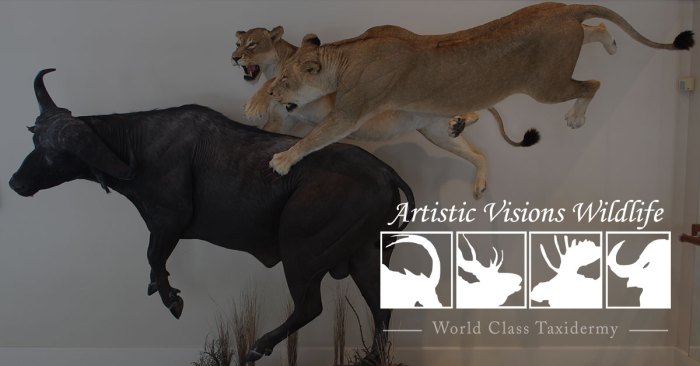
Taxidermy, the art of preserving animal skins and stuffing them to create lifelike representations, has a rich history that extends far beyond its modern connotations. Initially a purely practical pursuit, driven by the need to preserve specimens for scientific study or to display trophies of the hunt, taxidermy gradually evolved into a sophisticated art form, reflecting evolving artistic sensibilities and technological advancements.
Early taxidermy techniques were rudimentary, often resulting in stiff, unnatural-looking mounts. Animals were simply stuffed with straw or other readily available materials, leading to distorted shapes and lifeless expressions. However, over time, skilled artisans began to experiment with different materials and techniques, striving for greater realism and aesthetic appeal. The development of more sophisticated methods, including the use of artificial eyes and the careful shaping of muscles and skin, significantly enhanced the artistry of taxidermy.
The Transition from Science to Art
The transition of taxidermy from a primarily scientific practice to an artistic pursuit is evident in the work of several key figures. Early naturalists, such as Carl Linnaeus (1707-1778), while not taxidermists themselves, heavily relied on accurate representations of animals for their taxonomic studies, indirectly influencing the development of more precise taxidermy techniques. Later, individuals like Louis Dufresne (1752-1833) in France and Walter Potter (1835-1876) in England pushed the boundaries of the art form, creating increasingly realistic and often whimsical taxidermy pieces. Dufresne is celebrated for his meticulous attention to detail and lifelike poses, while Potter’s anthropomorphic creations—animals engaging in human activities—represent a unique and highly influential departure from traditional taxidermy. These artists demonstrated that taxidermy could be a medium for artistic expression, moving beyond mere scientific representation.
Technological Advancements and Artistic Impact
Scientific advancements played a crucial role in transforming taxidermy. The development of new materials, such as glass eyes and improved stuffing materials (like cotton and later, synthetic materials), allowed for greater realism and durability. The introduction of techniques like tanning and the use of armatures for posing provided greater control over the final product’s form and posture. These innovations, combined with a growing understanding of animal anatomy, enabled taxidermists to create more lifelike and aesthetically pleasing mounts. Furthermore, the rise of photography and its influence on artistic representation indirectly impacted taxidermy, encouraging a shift towards more dynamic and naturalistic poses.
Museums and Private Collections: Shaping Public Perception
Museums and private collections have been instrumental in shaping the public perception and appreciation of taxidermy as an art form. Early natural history museums showcased taxidermied animals as part of their scientific collections, educating the public about biodiversity and natural history. However, the artistic merit of taxidermy often remained understated. Over time, as taxidermy techniques improved and the artistic potential of the medium became more apparent, museums began to exhibit taxidermy pieces as works of art in their own right. Private collectors also played a significant role, amassing impressive collections that highlighted the skill and artistry involved in creating these pieces. The influence of these collections, both public and private, significantly impacted the evolution and appreciation of taxidermy as an art form.
| Date | Artist/Creator | Piece Name | Description |
|---|---|---|---|
| 18th Century | Various anonymous artisans | Various animal mounts | Early examples, often stiff and simplistic, reflecting rudimentary techniques and a focus on preservation rather than artistry. |
| Late 18th – Early 19th Century | Louis Dufresne | Numerous animal mounts | Known for his meticulously detailed and lifelike representations, showcasing a significant step towards artistic sophistication. |
| 19th Century | Walter Potter | “The Courtship, Courtship and Marriage of the Brown Bear” | Anthropomorphic scene featuring taxidermied animals, a radical departure from traditional taxidermy, highlighting the art form’s potential for narrative and creative expression. |
| Late 19th – Early 20th Century | Various taxidermists | Museum dioramas | Development of elaborate dioramas depicting animals in their natural habitats, combining taxidermy with artistic scene-setting and environmental representation. |
Artistic Movements Influencing Taxidermy Aesthetics

Taxidermy, far from being a purely scientific endeavor, has always possessed a strong artistic component. The aesthetic choices made in preparing and displaying animal specimens have been profoundly shaped by prevailing artistic movements and cultural trends throughout history. This section will explore the significant influence of various artistic styles on the evolution of taxidermy as an art form, focusing on the Victorian era, naturalism versus surrealism, and the impact of Romanticism and the Arts and Crafts movement.
Victorian Era Influence on Taxidermy
The Victorian era (roughly 1837-1901) exerted a considerable influence on taxidermy aesthetics. The era’s emphasis on meticulous detail, elaborate ornamentation, and the display of wealth and status found expression in increasingly complex and ornate taxidermy pieces. Animals were often posed in highly artificial and theatrical settings, reflecting the popular Victorian taste for dramatic and sentimental scenes. Dioramas became increasingly sophisticated, incorporating detailed backgrounds, miniature props, and even artificial lighting to create immersive and visually stunning displays. For example, a taxidermy piece depicting a hunting scene might feature meticulously posed animals amidst a meticulously crafted forest scene complete with miniature trees, rocks, and even a small, painted stream. Another example might be a meticulously crafted glass-topped case showcasing a collection of exotic birds, each posed individually and arranged to maximize visual impact. The emphasis was less on scientific accuracy and more on creating visually arresting works of art that reflected the Victorian fascination with the natural world, albeit a highly romanticized and stylized version.
Naturalism versus Surrealism in Taxidermy
The stylistic differences between naturalistic and surreal taxidermy are striking. Naturalistic taxidermy aims for anatomical accuracy and a lifelike representation of the animal in its natural habitat. The focus is on realism and scientific precision, with poses and settings chosen to reflect the animal’s behavior and environment. In contrast, surreal or fantastical taxidermy uses the animal form as a starting point for artistic expression, often incorporating elements of fantasy, whimsy, or even macabre imagery. Animals might be posed in unnatural positions, combined with unrelated objects, or altered in ways that defy natural laws.
| Characteristic | Naturalistic Taxidermy | Surreal/Fantastical Taxidermy |
|---|---|---|
| Pose | Lifelike, natural behavior | Unnatural, theatrical, or symbolic |
| Setting | Realistic habitat | Artificial, fantastical, or abstract |
| Materials | Primarily animal remains | May incorporate other materials (e.g., found objects, paint) |
| Overall Impression | Scientific accuracy, realism | Artistic expression, imagination |
Influence of Romanticism and the Arts and Crafts Movement
Romanticism’s emphasis on emotion, imagination, and the sublime greatly influenced taxidermy. Animals were often depicted in dramatic or idealized poses, reflecting the Romantic fascination with the power and beauty of nature. The Arts and Crafts movement, with its emphasis on handcrafted artistry and natural materials, also impacted taxidermy. This led to a greater appreciation for the inherent beauty of animal specimens and a rejection of overly artificial or ostentatious displays.
Example 1: A Romantic-era taxidermy piece might depict an eagle perched atop a craggy mountain peak, its wings outstretched in a powerful and dramatic pose. The setting itself is idealized and romanticized, emphasizing the bird’s majesty and connection to the wild. The artist aimed to capture the awe-inspiring power of nature and the animal’s place within it, rather than simply create a realistic representation.
Example 2: An Arts and Crafts-influenced taxidermy piece might feature a small collection of birds carefully arranged within a simple, handcrafted wooden case. The focus is on the natural beauty of the birds themselves, with the display designed to complement rather than overshadow the specimens. The simplicity of the case and the careful arrangement of the birds reflect the movement’s emphasis on natural materials and handcrafted artistry.
Example 3: A taxidermy piece reflecting both Romantic and Arts and Crafts sensibilities might feature a deer gracefully posed in a naturalistic woodland setting, but with a slightly idealized and romanticized composition. The deer is presented not simply as a specimen, but as a symbol of the beauty and power of nature, reflecting the Romantic sensibility. However, the materials used and the overall presentation are simple and elegant, reflecting the Arts and Crafts aesthetic.
Modern Taxidermy and its Artistic Expressions
The resurgence of taxidermy in the 21st century marks a significant shift from its purely utilitarian origins. No longer solely confined to museums or hunting lodges, taxidermy has blossomed into a vibrant art form, embraced by contemporary artists who push creative boundaries and challenge traditional perceptions. This evolution is evident in the unconventional settings where taxidermy appears, its integration with other artistic mediums, and the innovative techniques employed by modern practitioners.
Modern taxidermy artists often utilize unconventional materials and methods, resulting in pieces that transcend the purely representational. They explore themes of mortality, nature, and the human relationship with the animal kingdom, often with a distinctly conceptual approach. This section will explore this exciting contemporary evolution, highlighting the work of influential artists and showcasing the diversity of their artistic expressions.
Innovative Techniques and Materials in Modern Taxidermy
Many contemporary taxidermists are moving beyond traditional methods, incorporating diverse materials and techniques to achieve unique aesthetic effects. Instead of simply preserving animals in lifelike poses, they are using taxidermy as a base for sculptural installations, combining it with found objects, mixed media, and even digital elements. For example, the use of resin casting allows for the creation of incredibly detailed and lifelike representations, often incorporating elements of surrealism or fantasy. Similarly, the integration of metalwork, glass, and other materials adds another layer of complexity and artistic expression. This fusion of traditional craftsmanship with contemporary art practices expands the possibilities of taxidermy, allowing artists to create deeply personal and thought-provoking pieces.
Examples of Modern Taxidermy Art
The following examples illustrate the breadth and depth of modern taxidermy’s artistic expression:
- Piece 1: “Untitled” by [Hypothetical Artist A]: This piece features a meticulously preserved hummingbird suspended within a glass sphere filled with iridescent liquid. The hummingbird’s delicate form is highlighted by the refracted light, creating an ethereal and almost otherworldly effect. The artist employs a highly refined taxidermy technique, ensuring the bird’s plumage retains its vibrant colors and delicate texture. The overall impact is one of delicate beauty and fragility, prompting reflection on the fleeting nature of life. The use of the glass sphere transforms the traditional display method, emphasizing the object’s fragility and creating a miniature, enclosed ecosystem.
- Piece 2: “Urban Fox” by [Hypothetical Artist B]: This work contrasts sharply with the previous example. It depicts a red fox, skillfully taxidermied and integrated into a miniature cityscape constructed from reclaimed materials. The fox appears to be perched atop a crumbling building, a commentary on the encroachment of urban development on natural habitats. The artist’s technique combines traditional taxidermy with meticulous model-making skills, creating a powerful and thought-provoking statement about environmental issues. The use of found objects and the juxtaposition of natural and man-made elements enhances the piece’s social and environmental message.
- Piece 3: “Reimagining the Stag” by [Hypothetical Artist C]: This piece takes a more abstract approach. Instead of aiming for realism, the artist utilizes the antlers of a stag as the central element of a large-scale sculptural installation. The antlers are carefully cleaned and treated, then incorporated into a structure of intertwined metal wires and found objects, forming a complex and visually arresting piece. The overall effect is less about representing a specific animal and more about exploring themes of growth, branching, and the interconnectedness of nature. The artist’s unconventional use of the antlers challenges traditional notions of taxidermy, transforming the material into an abstract sculptural form.
Outcome Summary

The journey through the artistic influences on taxidermy reveals a captivating story of evolution and innovation. From its early practical applications to its contemporary resurgence as a vibrant art form, taxidermy has consistently reflected the aesthetic sensibilities of its time. The diverse artistic expressions showcased, ranging from the meticulous detail of Victorian-era pieces to the bold experimentation of modern taxidermists, highlight the enduring appeal and versatility of this unique medium. The inherent tension between scientific accuracy and artistic interpretation remains a central theme, enriching the art form’s enduring fascination.