Preserving the beauty and majesty of aquatic life through taxidermy is a skill demanding precision and artistry. This guide delves into the intricacies of advanced fish taxidermy, offering ten detailed techniques to elevate your skills. From mastering the delicate art of skinning various species to crafting lifelike forms and applying realistic paint schemes, we explore the nuances of transforming a simple fish into a breathtaking piece of art.
We will cover advanced skinning methods tailored to different fish types, including bony, cartilaginous, and eels. The construction and shaping of fish forms using diverse materials will be detailed, along with a comparison of their advantages and disadvantages. Finally, we’ll explore advanced finishing techniques, focusing on realistic painting, sealant application, and unique mounting and display options. Prepare to refine your technique and create truly remarkable taxidermy.
Advanced Skinning Techniques in Fish Taxidermy
Proper skinning is paramount to successful fish taxidermy, ensuring the preservation of the skin’s integrity and the creation of a lifelike mount. The process varies significantly depending on the species, primarily due to differences in size, bone structure, and skin thickness. Careful attention to detail and the use of appropriate tools are crucial for achieving optimal results.
Skinning Methods for Different Fish Species
The approach to skinning differs considerably between bony fish, cartilaginous fish (sharks and rays), and eels. Bony fish, with their intricate skeletal structures, require a more delicate touch, while cartilaginous fish present unique challenges due to their flexible skeletons and tough skin. Eels, with their elongated bodies and lack of defined scales, necessitate a specialized technique. The following table summarizes the key differences:
| Species | Method | Tools | Potential Challenges |
|---|---|---|---|
| Bony Fish (e.g., Bass, Trout) | Incision along the belly, careful separation of skin from muscle using blunt instruments, working from the belly towards the head and tail. | Scalpel, fine-tipped scissors, bone scraper, fleshing tool. | Thin skin prone to tearing, delicate bones requiring careful manipulation. |
| Cartilaginous Fish (e.g., Sharks, Rays) | Incision along the belly, careful separation of skin from cartilage using sharp instruments, paying close attention to avoiding damage to the placoid scales. | Sharp scalpel, heavy-duty scissors, skinning knife, placoid scale scraper (if needed). | Thick, tough skin; large size and weight of the fish; potential for scale damage. |
| Eels | Longitudinal incision along the belly, careful separation of skin from muscle, using a combination of pulling and scraping techniques. | Sharp scalpel, long-handled scissors, fleshing tool, possibly a small, blunt hook for separating skin from the head. | Very slippery skin, fragile body structure, difficulty in removing the head skin without tearing. |
Preserving Skin Integrity During Skinning
Maintaining the integrity of the fish skin is crucial for a high-quality mount. Tears and damage can significantly detract from the final product. To prevent such issues, it’s essential to work slowly and carefully, using sharp, appropriately sized tools. Keeping the skin moist throughout the process, using a damp sponge or towel, helps maintain its flexibility and reduces the risk of tearing. Avoid excessive pulling or stretching, and use blunt instruments where possible to minimize damage to delicate tissues. For particularly thin-skinned species, consider using a thin layer of preservative on the flesh side of the skin before starting the skinning process.
Eye and Gill Removal
Removing the eyes and gills requires precision to avoid damaging the surrounding tissues. For eye removal, a small, sharp scalpel can be used to make a small incision behind the eye, severing the optic nerve. The eye can then be carefully removed with gentle pressure. To minimize damage to the socket, a small, blunt instrument can be used to carefully separate the eye from its surrounding tissues. For gill removal, carefully cut the gill arches with sharp scissors, ensuring not to damage the surrounding skin. The gills can then be carefully removed with a pair of forceps or a similar tool.
Specialized Tools for Advanced Skinning
Several specialized tools enhance the skinning process. A scalpel with interchangeable blades allows for precise incisions. Fine-tipped scissors are invaluable for delicate work around the head and fins. A fleshing tool, with its curved blade, efficiently removes remaining flesh from the skin. A bone scraper is useful for removing small bone fragments from the skin surface. A sturdy skinning knife with a flexible blade is well-suited for larger fish. Imagine the curved blade of the fleshing tool, allowing for easy removal of stubborn muscle tissue from the inner surface of the skin without tearing it. The scalpel’s sharp point enables precise incisions, while the blunt end of the bone scraper is perfect for gently removing small bone fragments adhering to the skin.
Advanced Fish Form Construction & Shaping
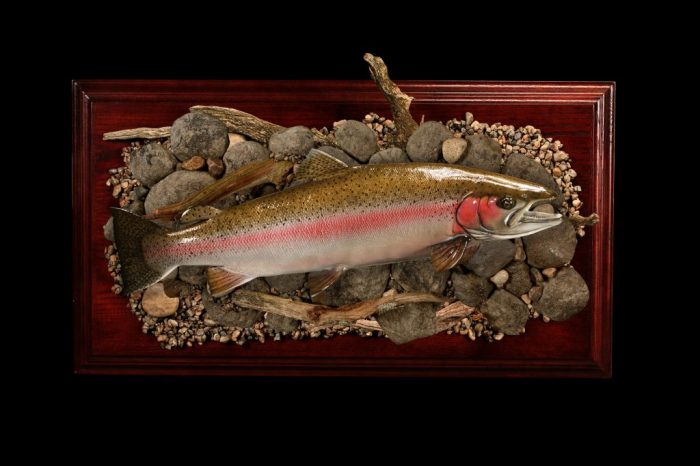
Creating realistic fish forms is paramount to successful taxidermy. The form serves as the foundation upon which the skin and other details are built, directly impacting the final product’s realism and aesthetic appeal. Careful consideration of materials, construction techniques, and shaping methods are crucial for achieving accurate anatomical representation.
Fish Form Designs: Material Selection and Construction
This section details the construction of three different fish forms for a largemouth bass, each utilizing different materials to illustrate various approaches and their respective benefits.
Design 1: Balsa Wood Form
For this design, we’ll use balsa wood for its lightweight nature and ease of carving. The process begins with creating a rough carving of the bass’s body shape using reference photos and measurements. Once the basic form is established, finer details such as the lateral line, pectoral girdle, and musculature are carefully sculpted using various carving tools. The head is meticulously shaped, paying close attention to the eye sockets, operculum, and jaw structure. Balsa wood’s softness allows for precise detailing, while its lightness keeps the finished form manageable. Finally, the form is sanded smooth and primed for skin application.
Design 2: Expanded Polystyrene Foam Form
Expanded polystyrene foam (EPS) offers a different approach. We’ll begin by carving a rough shape from a block of foam using a hot-wire cutter for precise cuts and a smoother finish. This material allows for easy removal of material, making it ideal for complex curves. Fine details are added using various carving tools and sandpaper. This material’s rigidity can be an advantage for larger fish species. However, it requires careful handling to prevent crumbling. After shaping, the form is sealed with a suitable primer to ensure proper adhesion of the skin.
Design 3: Epoxy Resin Form with Embedded Wire Armature
This method provides the most durable and structurally sound form. A wire armature is constructed to match the fish’s skeletal structure. This armature is then coated with multiple layers of epoxy resin, carefully shaped and sculpted with tools between layers to achieve the desired form. This technique allows for the creation of incredibly detailed and accurate forms, capable of withstanding the rigors of handling and display. The added strength is particularly beneficial for larger, more robust species. However, it requires more skill and time compared to the previous methods.
Material Comparison: Advantages and Disadvantages
The choice of material significantly influences the form’s characteristics and the overall taxidermy process. Consider the following:
The following table summarizes the advantages and disadvantages of each material:
| Material | Advantages | Disadvantages |
|---|---|---|
| Balsa Wood | Lightweight, easy to carve, precise detailing | Can be brittle, requires careful handling |
| Expanded Polystyrene Foam | Easy to shape, good for complex curves, relatively inexpensive | Can crumble, requires careful handling, less durable than epoxy |
| Epoxy Resin | Strong, durable, highly detailed, precise | More time-consuming, requires specialized skills and equipment, more expensive |
Form Shaping: Achieving Anatomical Accuracy
Shaping the form to accurately reflect the fish’s anatomy is critical. This involves carefully sculpting the body to represent the musculature, lateral line, and other defining features. We’ll use reference photos and anatomical diagrams as guides. Common techniques include carving, sanding, and filing. For example, the pectoral and pelvic girdles should be subtly defined, and the lateral line should be accurately represented as a slight ridge along the body. The curves of the body should flow naturally, avoiding abrupt transitions. Visualizing the underlying musculature helps to create a more lifelike form. The head requires particularly careful attention to detail, ensuring accurate representation of the eye sockets, operculum, and jawline.
Fin Sculpting and Detailing
Creating natural-looking fins is essential for realism. We can sculpt fins directly into the form using the chosen material or add separate sculpted fins made from the same material or a compatible alternative such as clay. The fins should exhibit natural curves and movement, avoiding stiffness. To achieve this, carefully sculpt the fin rays, ensuring that they are not perfectly uniform but exhibit slight variations in length and curvature. This creates a more natural, flowing appearance. Consider the position and orientation of each fin based on the species and the fish’s pose. A slightly raised dorsal fin or gently curved pectoral fins contribute significantly to the overall realism of the finished piece. The fins should be seamlessly integrated into the body of the form, avoiding sharp transitions or unnatural gaps.
Advanced Finishing Techniques & Presentation

Achieving a truly lifelike taxidermied fish requires meticulous attention to detail in the final stages. This section covers advanced finishing techniques, focusing on realistic paint application, sealant selection, and effective mounting and display strategies to showcase your work. These techniques elevate your finished piece from a mere replica to a captivating work of art.
Realistic Paint Application
Creating a convincing paint scheme involves more than simply applying colors; it’s about mimicking the subtle nuances of a living fish. The key lies in skillful color blending and the replication of natural scale patterns.
- Base Coat Application: Begin with a thin, even base coat of the fish’s primary body color. Use acrylic paints, known for their water-based, quick-drying properties and vibrant color range. Allow ample drying time between coats.
- Color Blending and Shading: Employ a wet-on-wet blending technique to transition smoothly between colors. Use darker shades to create shadows in the gill area, along the lateral line, and beneath the fins. Lighter tones should highlight the belly and upper flanks. Think about how light reflects off the fish’s body in natural settings.
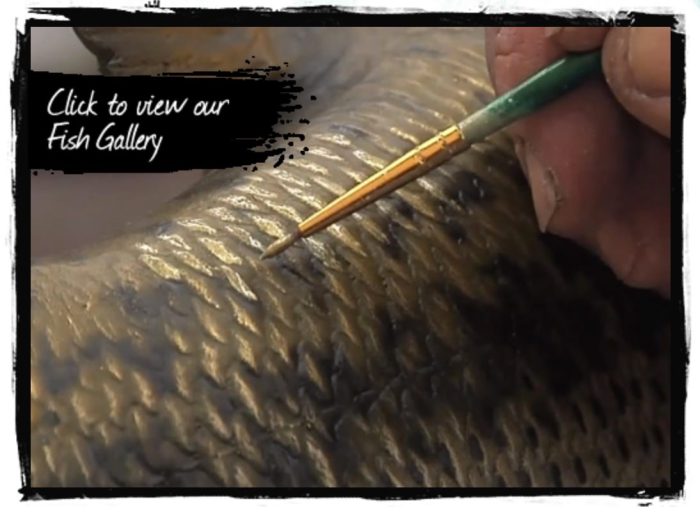
- Scale Replication: Use a fine-tipped brush to create individual scales. Begin by outlining the scales with a slightly darker shade than the base color, then fill them in with the base color. Vary the scale size and intensity to simulate natural variation. Consider using a stippling technique for a more textured appearance.
- Pattern Application: Replicate the fish’s natural patterns with careful brushwork. If the fish has stripes, use thin, even lines. For spots or blotches, use a dabbing technique, varying the size and intensity to mimic the natural irregularity of these markings.
- Final Touches: Once the paint is completely dry, add subtle highlights using a very light shade of the base color. This will enhance the three-dimensionality of the fish. Use a very fine brush for detail work such as the eyes and mouth.
Sealant and Varnish Selection
Proper sealing is crucial for long-term preservation. Various sealants and varnishes offer different properties, impacting the final product’s longevity and appearance. Choosing the right one depends on your desired finish and the environmental conditions.
| Sealant Type | Properties | Application Method | Longevity |
|---|---|---|---|
| Acrylic Sealant | Water-based, flexible, non-yellowing | Brush application | 5-10 years |
| Polyurethane Varnish | Durable, hard finish, water-resistant | Brush or spray application | 10+ years |
| UV-Resistant Varnish | Protects against sun damage, maintains color | Brush or spray application | 10+ years |
| Epoxy Resin | Extremely durable, high gloss finish | Pouring or brushing | 20+ years |
Mounting and Display Techniques
The mounting process is the final step in showcasing your work. Careful consideration of the base, pose, and overall display will significantly impact the visual appeal of your finished piece.
- Base Construction: The base should complement the fish, not overpower it. Consider using natural materials like wood or stone for a rustic look, or a more modern base made of acrylic or metal for a contemporary feel. The base should be sturdy and securely hold the fish in its desired position.
- Posing the Fish: The pose should be natural and dynamic. Avoid unnatural or stiff positions. Experiment with different angles to find the most appealing presentation. Consider the fish’s natural swimming posture and its environment.
- Display Techniques: The display method depends on the fish’s size and the overall aesthetic you’re aiming for. Options include wall mounting, using a pedestal base, or incorporating the fish into a diorama.
Unique Display Base Designs
Here are three unique display base concepts:
- Rustic Wooden Base: A simple, yet elegant base crafted from a weathered piece of driftwood. The fish is mounted on a small, strategically placed branch, creating a natural, organic display. The wood’s texture and color complement the fish’s coloration. Imagine a largemouth bass positioned mid-leap, its body angled dynamically along the curve of the wood.
- Modern Acrylic Base: A clear acrylic base with integrated LED lighting. The fish is suspended mid-water, creating an illusion of it swimming. The lighting enhances the fish’s colors and creates a dramatic visual effect. Imagine a brightly colored trout, suspended within a sculpted, clear acrylic form that mimics flowing water.
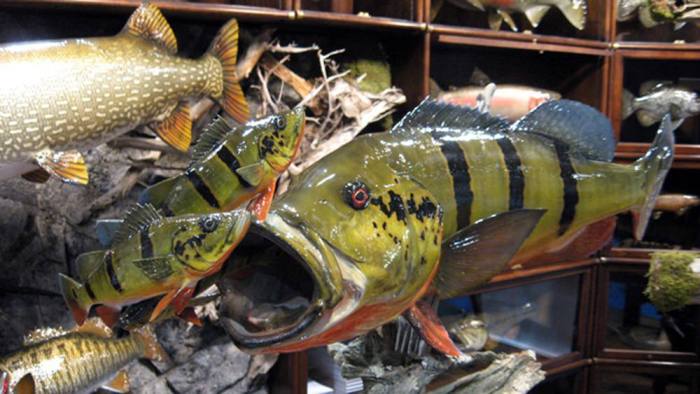
- Diorama Base: A miniature diorama depicting the fish’s natural habitat. This could include elements like rocks, plants, and perhaps even smaller, realistically sculpted fish. The diorama provides context and creates a more immersive viewing experience. Picture a small reef scene with a brightly colored parrotfish positioned amongst corals and anemones, the base itself meticulously sculpted to recreate the underwater landscape.
Final Wrap-Up
Through meticulous skinning, precise form construction, and artful finishing, advanced fish taxidermy allows for the creation of stunning, lifelike representations of aquatic life. By mastering the techniques detailed in this guide, you can elevate your work to a new level of realism and artistry, transforming ordinary fish into captivating displays that celebrate the beauty and diversity of the underwater world. The journey from raw specimen to finished artwork is a rewarding one, demanding patience, precision, and a deep appreciation for the natural world.