Beyond its often-controversial reputation, taxidermy holds a significant place in preserving our natural heritage. This art and science, spanning centuries, plays a surprisingly multifaceted role, from advancing scientific understanding to enriching museum collections and inspiring artistic expression. This exploration delves into five key contributions taxidermy makes to historical preservation and our comprehension of the natural world.
From meticulously preserving specimens for genetic analysis and anatomical study to creating captivating museum exhibits that educate and enthrall the public, taxidermy’s impact is undeniable. It also serves as a unique artistic medium, showcasing the skill and artistry involved in recreating lifelike representations of animals. This detailed examination will illuminate the often-overlooked historical and cultural importance of this practice.
Taxidermy as a Tool for Scientific Study and Preservation

Taxidermy, the art of preserving animal skins, has evolved far beyond its initial role as a decorative practice. It now plays a crucial role in scientific research, providing invaluable specimens for anatomical study, genetic analysis, and the understanding of biodiversity and evolutionary processes. The careful preservation of animals through taxidermy allows scientists access to detailed information long after the animal’s death, furthering our knowledge of the natural world.
Taxidermy’s contribution to scientific understanding hinges on its ability to preserve anatomical details and genetic material. Traditional methods focused primarily on aesthetic presentation, often sacrificing scientific integrity for visual appeal. Modern scientific taxidermy, however, prioritizes the preservation of data. Careful dissection and meticulous recording of anatomical features are essential, enabling researchers to study skeletal structure, muscle arrangement, and organ systems with precision. Furthermore, tissue samples can be collected and stored for future genetic analysis, providing insights into population genetics, evolutionary relationships, and the impact of environmental changes.
Comparison of Traditional and Modern Taxidermy Techniques for Scientific Preservation
The following table compares traditional and modern taxidermy techniques used for scientific preservation, highlighting differences in longevity, cost, and overall effectiveness in preserving scientific data.
| Preservation Method | Longevity | Cost | Data Preservation Quality |
|---|---|---|---|
| Traditional Taxidermy (primarily for display) | Variable, often decades but can degrade significantly over time due to material deterioration and pest damage. | Relatively low (depending on complexity) | Low; anatomical details often altered or obscured, limited genetic material available. |
| Modern Scientific Taxidermy (with tissue sampling and detailed anatomical records) | High, potentially centuries with proper storage and care, provided that proper preservation protocols are followed. | High; includes costs of specialized materials, skilled labor, and long-term storage. | High; detailed anatomical records and preserved tissue samples enable comprehensive genetic and anatomical studies. |
| Cryopreservation (freezing) | Potentially indefinite, depending on the technology and proper storage conditions. | High; specialized equipment and ongoing maintenance required. | High; preserves both anatomical and genetic material in excellent condition. |
| Fluid Preservation (e.g., formalin) | High; specimens can be preserved for decades or even centuries. | Moderate; requires appropriate containers and chemicals. | Moderate; anatomical details preserved, but genetic material preservation is often challenging. |
Taxidermy’s Role in Understanding Evolutionary Processes and Biodiversity
Preserved specimens, whether through traditional or modern taxidermy techniques, serve as invaluable resources for understanding evolutionary processes and biodiversity. Comparative anatomy studies, using taxidermied specimens from various species and time periods, can reveal evolutionary relationships, adaptive traits, and patterns of diversification. For instance, comparing the skeletal structures of extinct and extant species of birds can provide insight into the evolution of flight. Furthermore, the examination of preserved specimens allows researchers to track changes in species’ morphology over time, providing crucial data for understanding the impacts of environmental change and human activities on biodiversity. The study of preserved specimens, for example, helped scientists to document the decline in size of certain fish species due to overfishing. The analysis of genetic material extracted from taxidermied animals can also contribute significantly to phylogenetic studies and the understanding of evolutionary relationships. This provides a historical perspective on evolutionary changes that cannot be obtained through other methods.
Taxidermy’s Contribution to Museum Collections and Public Education
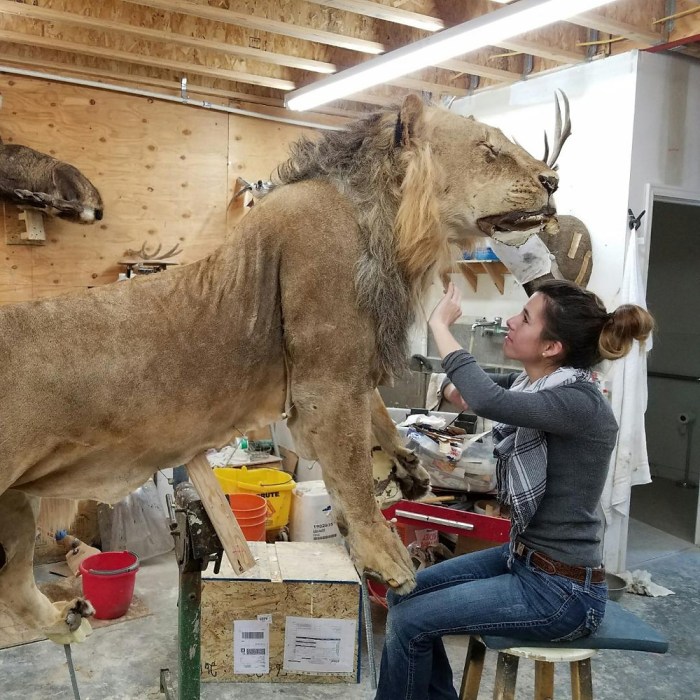
Taxidermy has played a pivotal role in the development and continued success of natural history museums worldwide. From the earliest days of these institutions, skilled taxidermists have been instrumental not only in preserving specimens for display but also in facilitating scientific research and public engagement with the natural world. Their meticulous work has provided invaluable resources for understanding biodiversity, tracking changes in populations, and educating future generations.
Taxidermy’s contribution to museum collections extends far beyond mere aesthetics. The careful preparation and preservation of specimens by taxidermists provided the foundation for many groundbreaking discoveries in zoology, ecology, and evolutionary biology. Early natural history museums relied heavily on taxidermied animals for comparative anatomical studies, enabling scientists to identify new species, understand anatomical variations, and trace evolutionary relationships. The accurate representation of animals in taxidermied form also allowed for the documentation of geographic distribution and habitat preferences, crucial data for understanding biodiversity patterns.
Taxidermied Animals in Museum Exhibits: Illustrating Ecological Concepts
An educational exhibit showcasing the impact of habitat loss on animal populations could effectively utilize taxidermied specimens. The exhibit could be structured chronologically, beginning with a diorama depicting a thriving ecosystem with diverse animal life represented by taxidermied specimens in their natural poses and settings. Subsequent dioramas would then progressively illustrate the effects of deforestation or habitat fragmentation, showing a decline in biodiversity and species numbers. Taxidermied animals would be presented in increasingly sparse environments, reflecting the shrinking habitats. Accompanying text panels and interactive displays would explain the ecological concepts of habitat loss, biodiversity, and the interconnectedness of species within an ecosystem. Visitors would visually witness the impact of human activity on wildlife populations, reinforcing the message of conservation.
Museum Use of Taxidermy for Public Engagement and Conservation Awareness
Museums employ taxidermy displays in a variety of ways to engage the public and promote conservation awareness.
- Dioramas depicting natural habitats: These lifelike recreations immerse visitors in the animal’s natural environment, fostering a deeper understanding of its behavior and ecological role. For instance, a diorama depicting a pride of lions hunting in the African savanna, complete with meticulously crafted vegetation and realistic lighting, would provide a captivating and educational experience.
- Comparative displays showcasing species diversity: Museums often utilize taxidermy to highlight the diversity of life on Earth. A display featuring various species of birds from a specific region, each accurately preserved and labeled, would educate visitors about the variety of adaptations and ecological niches occupied by these animals. This would visually communicate the importance of biodiversity and the need for conservation efforts.
- Interactive exhibits integrating taxidermy with multimedia: Modern museums are incorporating technology to enhance visitor engagement. A display featuring a taxidermied specimen might include interactive touchscreens providing detailed information about the animal’s biology, behavior, and conservation status. This would allow visitors to actively participate in the learning process.
- Exhibits highlighting the impact of human activity on wildlife: Taxidermied specimens can be used to illustrate the negative effects of human activities on animal populations. A display contrasting a healthy taxidermied animal with a specimen showing signs of pollution or habitat degradation would visually communicate the importance of environmental protection.
The Art and Skill of Taxidermy in Cultural and Artistic Expression
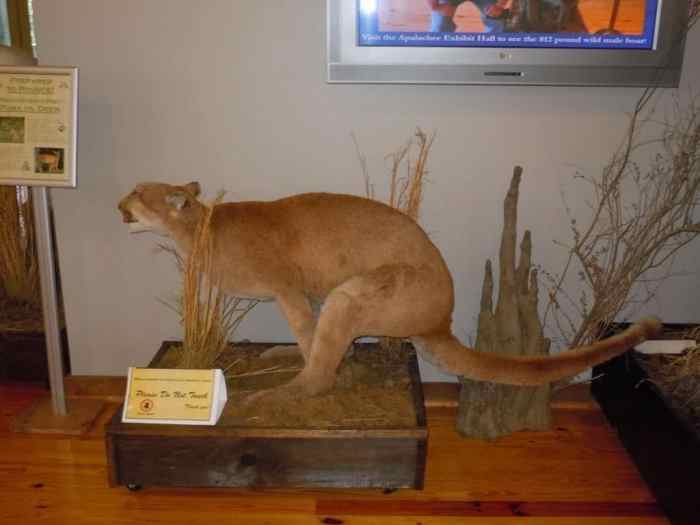
Taxidermy, often viewed solely as a method of preservation, transcends its scientific function to become a powerful medium for artistic expression and cultural storytelling. The skill involved extends far beyond mere preservation; it demands a deep understanding of anatomy, artistry, and a profound respect for the animal subject. The resulting pieces can be breathtakingly lifelike, imbued with emotion and capable of evoking a powerful connection between the viewer and the natural world.
Taxidermists employ a range of techniques to create realistic and aesthetically pleasing representations of animals. Accurate anatomical representation is paramount, requiring a detailed knowledge of musculature, skeletal structure, and skin manipulation. Achieving a lifelike pose involves careful positioning of limbs and the head, often requiring the use of armatures and wires to maintain the desired form. The artistry lies in capturing the animal’s unique personality and spirit through subtle adjustments to the pose, the expression of the eyes, and the careful placement of fur or feathers. The final result is not simply a preserved specimen, but a work of art that can evoke wonder and inspire awe.
Taxidermy in Art Installations and Cultural Ceremonies
Taxidermy’s integration into art installations and cultural ceremonies showcases its versatility as a medium. In contemporary art, taxidermied animals have been incorporated into thought-provoking installations that explore themes of nature, mortality, and human impact on the environment. For example, some artists use taxidermied animals to create surreal or unsettling juxtapositions, challenging conventional views of nature and challenging the viewer to contemplate the ethical implications of taxidermy itself. In some indigenous cultures, taxidermied animals hold significant cultural value, serving as ceremonial objects or representing ancestral spirits. These practices demonstrate the rich history and cultural significance of taxidermy beyond its scientific applications.
A Single Taxidermied Animal: The Arctic Fox
Imagine an Arctic fox, meticulously preserved, perched atop a small, snow-dusted boulder. Its thick, white fur is meticulously groomed, each individual hair seemingly perfectly placed. The artist has masterfully recreated the animal’s alert posture; its ears are pricked, its head slightly turned as if listening intently to some unseen sound. The amber eyes, expertly crafted from glass, possess a captivating intensity, conveying a sense of alertness and intelligence. The subtle shading and highlighting of the fur create a remarkable three-dimensionality, making the fox appear almost as if it might spring to life at any moment. The artist has used subtle wiring within the legs and tail to create a natural-looking curve and posture, avoiding any stiffness that might detract from the realism. The overall effect is not just a preserved animal, but a captivating portrayal of a creature perfectly adapted to its harsh environment, captured in a fleeting moment of wild alertness.
Closing Summary
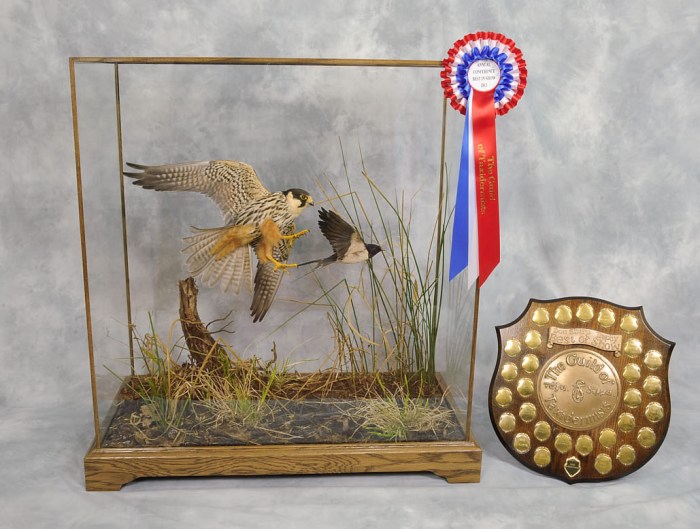
In conclusion, taxidermy’s contribution to preserving history extends far beyond mere preservation of animal specimens. It serves as a powerful tool for scientific research, educational outreach, artistic expression, and cultural understanding. While ethical considerations surrounding the practice remain important, the historical and ongoing significance of taxidermy in enriching our knowledge and appreciation of the natural world cannot be ignored. Its legacy continues to shape our understanding of biodiversity, evolution, and the enduring relationship between humanity and the animal kingdom.